The commercial success of a modern shopping center is no longer measured solely by the prestige of its location or the list of well-known brands on its façade. In the era of rapidly growing e-commerce, physical retail has had to transform. Shopping centers have become community hubs—places for meeting, entertainment, and experiences. However, for this transformation to generate real profit, it requires perfect orchestration of activities. The central brain of every successful retail destination is a precisely designedMall Marketing Calendar.
This strategic document is not just a simple list of dates when a stage will be set up or a Christmas tree decorated. It is a comprehensive plan that connects consumer behavior (B2C) with the business goals of your tenants (B2B). A properly structured campaign calendar can fill traffic gaps, extend dwell time, and ultimately maximize the turnover of individual stores. In the following paragraphs, we will explore in depth how to build such a calendar, how to maximize the potential of each season, and how to integrate modern technologies into the process.
Why a Shopping Center Needs a Data-Driven Marketing Plan
Many shopping centers still suffer from ad-hoc marketing syndrome. Campaigns are created at the last minute, events are organized just so "something is happening," and there is no connection to real business results. The outcome may be attractive social media photos—but zero impact on tenant revenues.
A true marketing calendar is built on historical data. It analyzes visitor traffic curves, maps periods when customers naturally shop, and identifies time slots when footfall needs to be artificially stimulated.
The Purpose of a Marketing Calendar
To create rhythm. Customers must learn that your center consistently delivers relevant content throughout the year. At the same time, this plan serves as the ultimate communication tool toward tenants. If a store manager knows six months in advance that a major campaign is coming, they can request additional staff, exclusive discounts, or special window visuals from headquarters. This synergy between the center's marketing and brand marketing is the key to above-average results.
The Anatomy of the Retail Year: Quarter by Quarter
The foundation of every calendar is dividing the year into logical units that respect not only holidays but, above all, customer purchasing cycles. Each quarter brings different challenges and requires a distinct approach to communication and event organization.
First Quarter: Fighting for Attention After the Christmas Rush
January to March are among the most challenging months in retail. Customers are financially drained after Christmas, and their motivation to shop declines.
The strategy during this period must focus on rational value and new beginnings. January is globally defined by post-Christmas sales. The center's marketing should not prioritize expensive events but instead aggregate and aggressively communicate tenant discounts. The center's role is to function as a megaphone for brand offers.
February brings the Valentine's campaign—a short but highly intense shopping opportunity targeting segments such as jewelry, cosmetics, lingerie, and gastronomy. The shopping center should create themed zones and connect shopping with experience, for example through romantic dinners in the food court.
March bridges into the spring season. It is an ideal time for fashion shows, new collection launches, and campaigns focused on refreshing wardrobes and homes after the long winter.
Second Quarter: Emotions, Family, and Preparing for Summer
April, May, and June are rich in emotionally charged events.
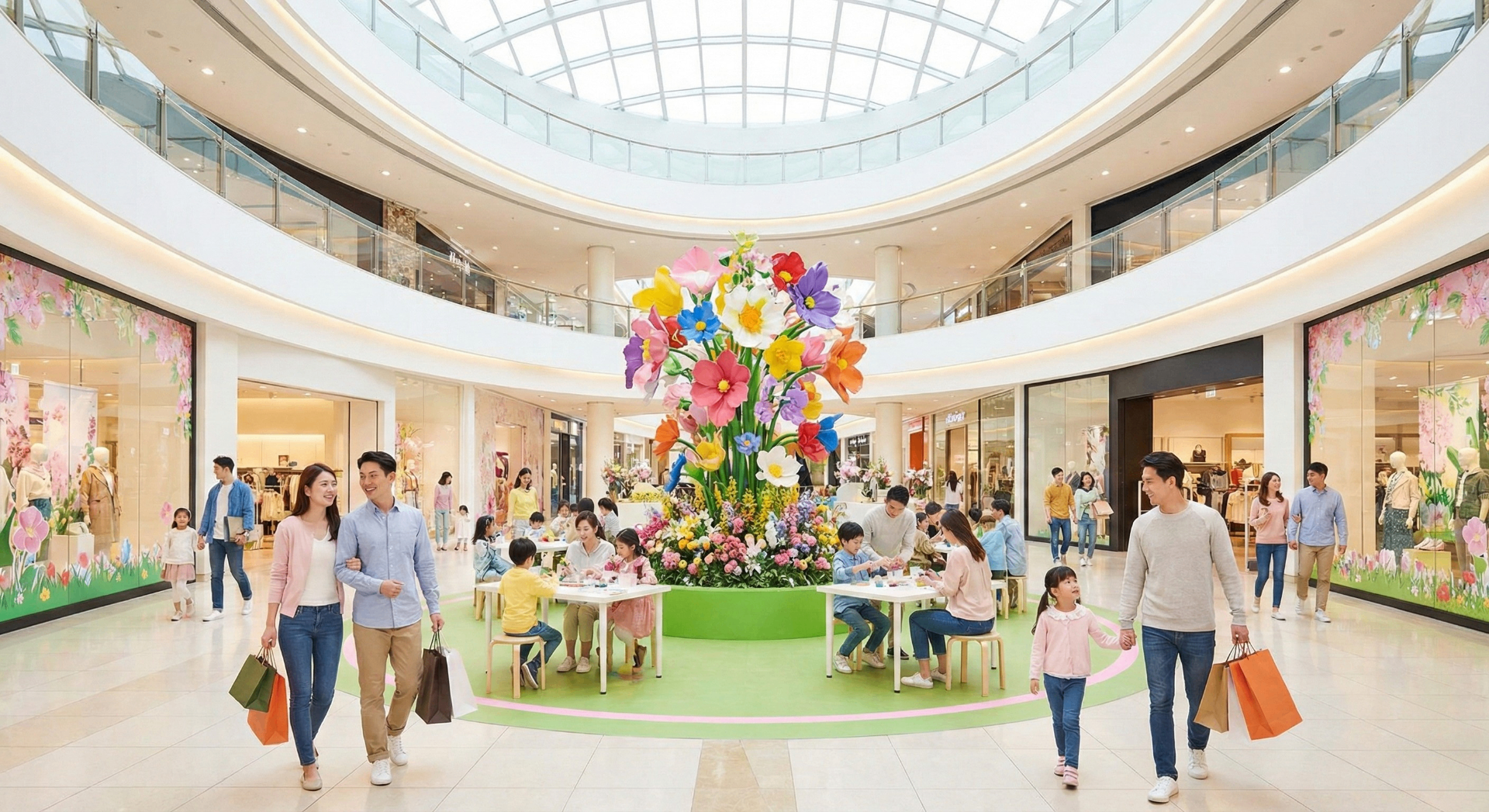
Easter functions as a spring equivalent of Christmas, though on a smaller scale. Marketing activities should target families with children. Interactive zones, creative workshops, and themed decorations can attract families for extended visits. During this period, sales of food, decorations, and children's clothing increase significantly.
Mother's Day follows, strongly focused on beauty, health, and gift segments. From a marketing perspective, it is an excellent opportunity for beauty zones, stylist consultations, and lifestyle events.
Late May and early June belong to Children's Day. At this moment, the shopping center transforms into a giant playground. A well-executed Children's Day event can generate one of the highest footfalls of the year, benefiting not only toy stores but also cafés, restaurants, and fashion brands due to accompanying parents.
As June ends, communication smoothly transitions to summer holidays and summer equipment shopping.

Third Quarter: Summer Slowdown and the Critically Important Back-to-School Season
Summer months are challenging for most shopping centers. People spend time outdoors, travel, and have little desire to spend weekends in air-conditioned malls.
The marketing goal in July and early August is to maintain at least the local community. Summer sales play a key role. Additionally, the center should offer what is missing outdoors—shelter from the heat. Rooftop summer cinemas, cooling zones, food festivals, and community sports screenings help keep the building alive.
The real turning point comes in late August and early September with the Back to Schoolcampaign. For many tenants—from stationery and electronics to children's fashion and footwear—this is the second most important campaign of the year after Christmas.
Marketing must approach this theme comprehensively. It is not just about discounts on notebooks; it is about equipping students for the entire year. Autumn fashion shows, interactive exhibitions, and IT equipment competitions are tactics that perform exceptionally well during this period.
Fourth Quarter: Retail's Gold Mine and a Logistical Challenge
The last three months of the year determine overall financial success for both the shopping center and its tenants.
October serves as preparation. Halloween events are excellent tools for boosting traffic at month-end, but the real storm arrives in November. Black Friday and Cyber Monday are no longer exclusive to e-commerce. For physical retail, this is the moment when stores must present their best offers, and the center must ensure flawless logistics—from parking capacity to customer navigation.
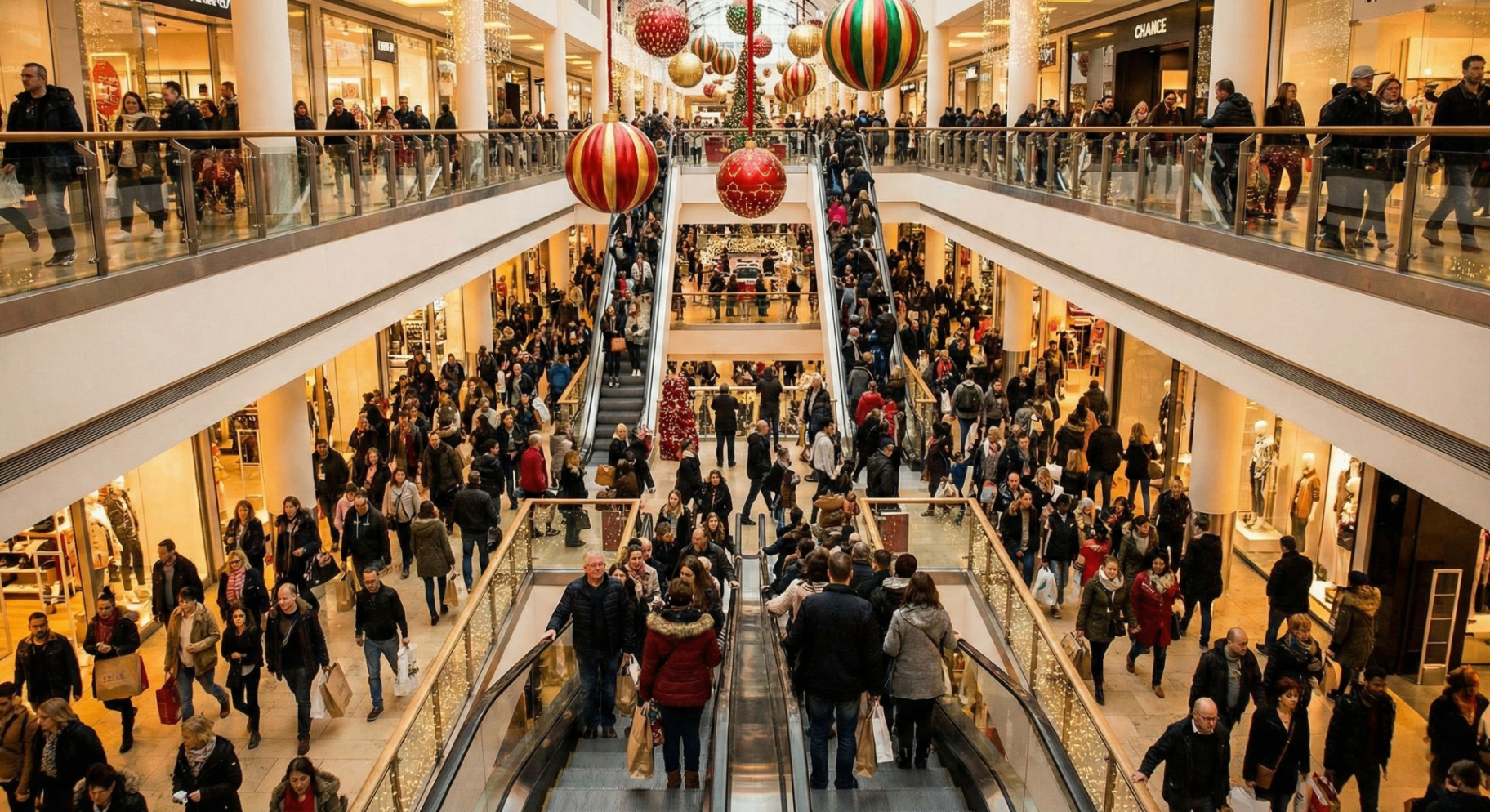
December is dominated by the Christmas campaign. It is no longer just about discounts but about magical atmosphere. Grand decorations, Christmas markets in the corridors, free gift wrapping, charity collections, and meetings with St. Nicholas are absolute standards.
During this time, the shopping center must become a place where customers want to spend time despite the stress associated with holiday shopping. Communication of opening hours, parking capacity, and additional services is critically important.
The Key Success Factor: B2B Communication and Tenant Engagement
Even the most creative and expensive marketing event will fail completely if tenants ignore it.
A common problem marketing managers face is fragmented and inefficient communication with store managers. Mass emails requesting discounts for the upcoming weekend often end up in spam or unanswered. If customers arrive due to a large advertising campaign but stores know nothing about it, frustration and reputational damage follow.
A centralized platformbridges this gap. Implementing an advanced solution such as a Tenant Portal for management and communication radically simplifies B2B collaboration. All marketing plans, visuals, and cooperation requests are securely stored in an app accessible to tenants anytime.
For example, when preparing a Back to School leaflet, the marketing team sends a standardized form via the portal to collect tenant offers. The system automatically tracks deadlines, sends reminders, and eliminates endless Excel rewriting. The result is seamless synergy: the center creates the attractive packaging, and tenants provide valuable content.
Maximizing Results Through Customer Loyalty
Every event or campaign generates large volumes of visitors. Without proper technological tools, however, they remain anonymous faces who leave after shopping—with no way to bring them back.
Connecting the physical marketing calendar with digital tools distinguishes average centers from leaders.
From One-Time Visitors to Loyal Customers
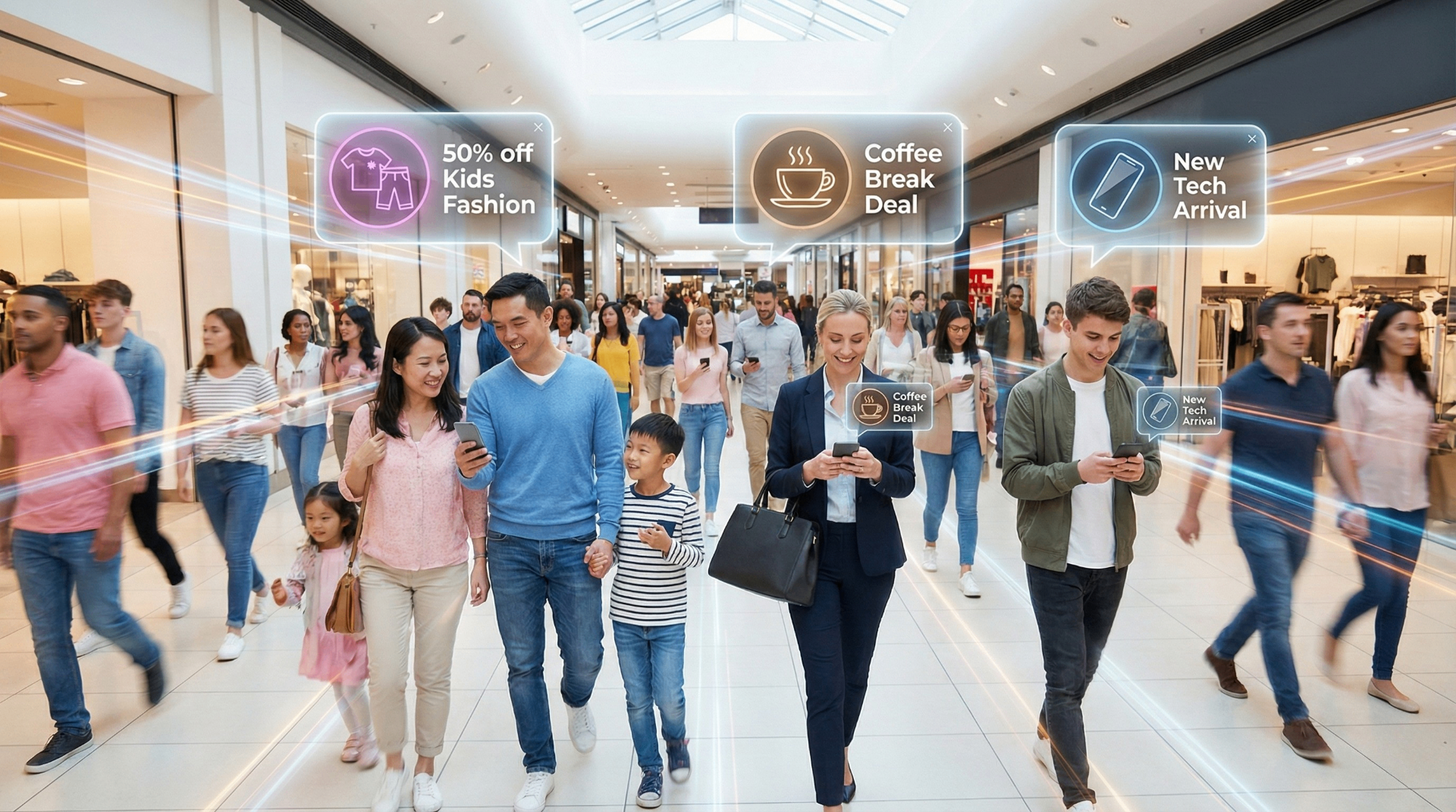
- Instead of distributing paper coupons during Black Friday, encourage customers to download the center's app with exclusive weekend offers. This provides valuable data about their preferences and behavior.
- When launching a Valentine's campaign in February, send personalized push notifications to customers who previously purchased jewelry or perfumes from your tenants.
Digitalization transforms one-time event visitors into loyal, long-term customers.
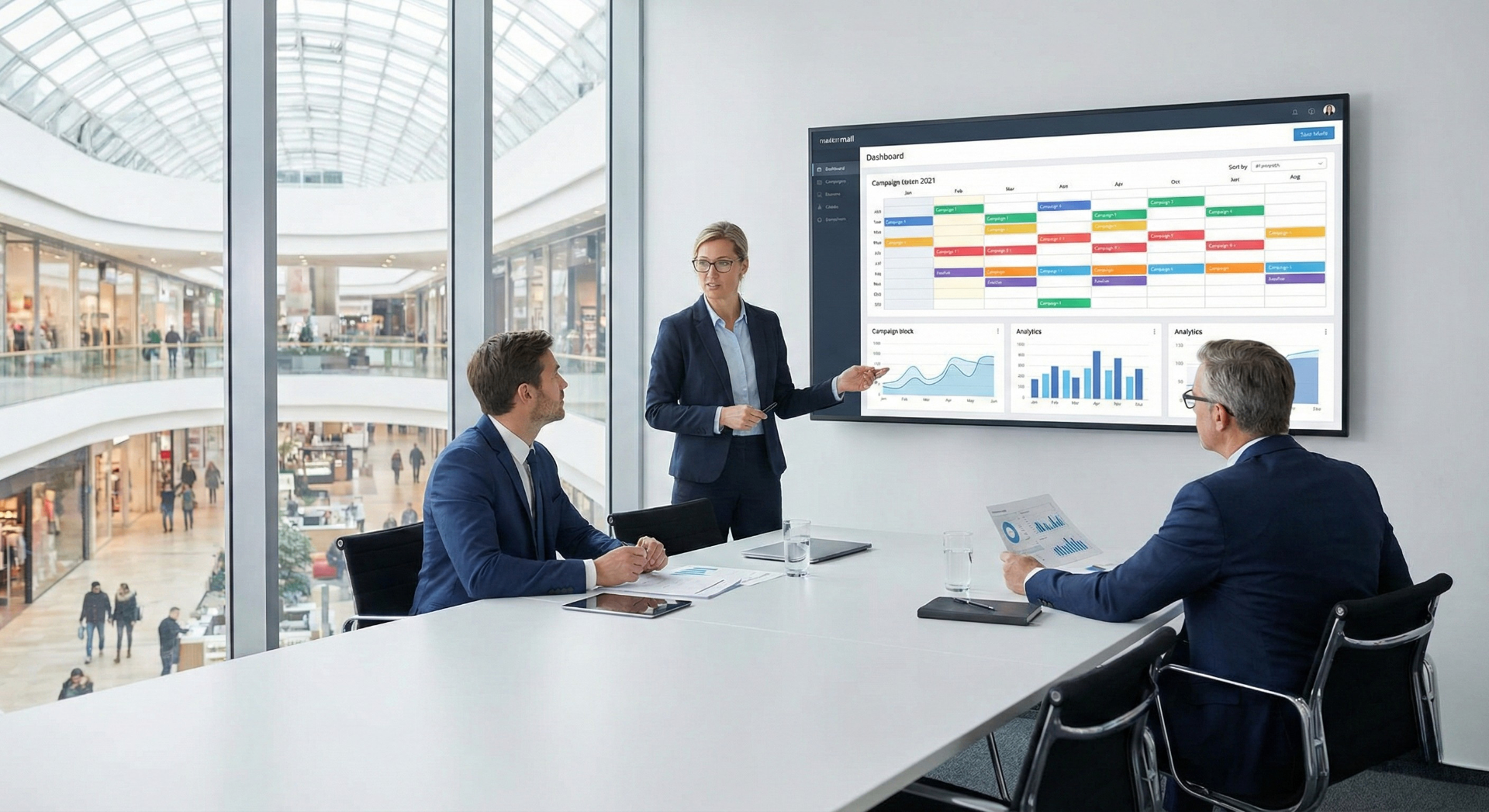
Take Your Campaign Management to the Next Level
Creating and executing a successful shopping center marketing calendar is an extremely complex task combining creativity, analytics, logistics, and intensive B2B communication. Old management methods—notice boards, printed circulars, chaotic email threads—not only slow you down but directly reduce your revenue.
To maximize every season, you need a system that connects your team, tenants, and customers into one integrated ecosystem. Mallsioprovides innovative tools for modern property management. Our platform allows you to distribute information seamlessly, collect campaign materials in record time, and build a community around your center based on data and efficiency.